

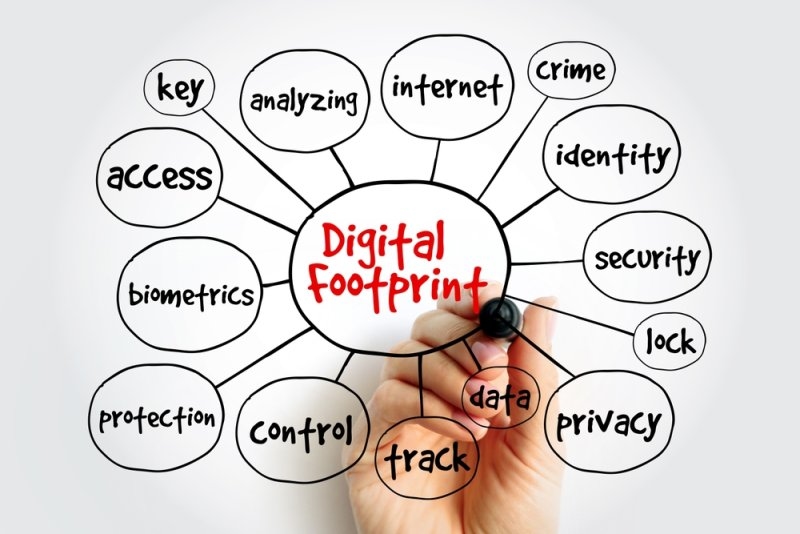
You contribute to your data shadow, also known as your digital footprint, with everything you do on the web, from perusing websites and surfing social sites to online shopping. By amassing data, these actions create an opportunity to look inside of your favorite pastimes, preferences, and even your actual life.
Once you gain this knowledge, you can determine how to effectively manage privacy and data, along with how to best act digitally.
Your digital footprint, or the data trace you create as you surf the net, may also appear as one of two different types of trace – active traces and passive traces. These traces are often the products of social profiles or data associated with browsing that website cookie information you often allow access to.
It may impact the privacy, security, and reputation of online users. As more data becomes public, managing and understanding what we share becomes critical. It is smart, with regard to personal data protection, to avoid too much of an online presence.
Your digital footprint develops through a variety of actions that have no association with your online persona or social footprint.
Understanding both forms is a sure way to pinpoint where your data is on the web and how to begin building and protecting your online persona.
Your digital footprint has a direct effect on your privacy. Private companies are able to analyze this data in order to offer targeted advertisements and services. Online hackers can exploit information available for phishing scams, identity theft, and other serious issues.
Managing your online presence doesn't have to mean forsaking the digital world entirely. With a few simple online privacy tips, you will be able to control what you share and thus minimize your exposure to risks like cyberattacks.
The many things we do everyday contributes to our digital footprint:
A basic review of any such actions could contribute to removing your data from public view and enhancing your personal data protection.
Reducing your digital footprint may be seen as reducing what information you leave available on the web. Small steps in this direction will create major improvements in your protection.
Delete unused online accounts, review and eliminate unnecessary online posts, as well as sensitive personal details from public view. Carefully review online applications and decline access to non-essential information.
These basic principles help you delete personal data from online users and make your online persona safer.
Smart internet safety includes things such as strong passwords and utilizing a two-factor authentication process, as well as updating operating systems, to fend off malicious attacks.
These effective online privacy tips offer you awareness of how online content is sourced and distributed.
Personal data protection is based around keeping private information away from illegal activity. Details such as your name, address, or financial information can easily fall prey to computer malware and cyber attackers.
Your digital persona mirrors the appearance you project on the web. Your Social Media pages, posts, profile, resume, and the work you do on the internet fall into this category. Your digital self requires a frequent scan of it and a word of wisdom about what you show online. Do a name search on yourself once in a while, update some necessary accounts/profiles, or remove objectionable content no longer befitting you.
Internet security is essential to protect your digital footprint. Phishing and fake online links are only two examples of numerous cyberattacks. Secure habits offer you defense against unauthorized accessing of your information.
Avoid sharing personal data with unknown online sources, verify unfamiliar emails before replying, use secure networks, and make sure you’re up to date with all of your software updates, and you will find that you limit the risk of cyberattacks. Following a strong habit of safe internet browsing will ensure your digital data is secure.
The web has become an intricate and crucial part of our lives, and careful management of your digital persona is something that will benefit you in years to come. You on-line presence will impact your privacy, your reputation, and countless future opportunities.
Taking command of your online existence doesn't require complex actions. Frequent look-throughs of each of your accounts and a well-maintained digital persona will result in a safer and more controlled presence on the web.
By making prudent choices about what you share online, maintaining secure online accounts, and continually observing the data available about you through careful personal data protection, you’ll be able to explore the fantastic world of technology with greater peace of mind.
Presents the information you leave behind from your online activity. And while there are a number of things you can’t erase from the internet, a smart selection of online privacy tips can be applied to lessen what you expose and enhance personal data protection.
Following simple security techniques will allow you to enjoy a safer online existence.
Your digital footprint may not be entirely removable because some information may remain on files of websites or the companies that own them, and on other people's data. You can, however, minimize unwanted data from being visible and secure your privacy by looking into your accounts and the things you post.
Digital identity tells people and businesses how you are viewed over the internet. Making sure your personal details online are up-to-date, and the content you post is responsible as well as secure will help to gain more trust, and the more reliable you are online, the more people/businesses will trust and value you.
Most apps do track things like your location, how often you use the app, and your device type. However, you can limit how many traces are found in your digital footprint by reviewing the permission settings in all of your apps and by discarding applications that you rarely use.
A strong password is just one extra barrier against your accounts being accessed by unwanted people. Using individual passwords for each account and using an extra form of authentication will help protect your identity while browsing the net.
Limiting the information you share online is good as it creates a lower risk of any privacy issues occurring. Privacy issues could be anything from personal information becoming accessible to other people, or to the management of your digital identity itself.
This content was created by AI